Artificial Intelligence Impacts in Architecture, Engineering & Construction
- AEC Hires
- Oct 28, 2024
- 3 min read
Artificial Intelligence (AI) is transforming industries worldwide, and the architecture, engineering, and construction (AEC) sector is no exception. With AI's ability to streamline complex processes, enhance productivity, and enable innovative designs, AEC firms are leveraging this technology to optimize workflows, cut costs, and boost efficiency.
One significant impact of AI in the AEC industry is its role in design and planning. AI-driven design tools can rapidly generate and evaluate countless design alternatives, helping architects and engineers identify optimal solutions in far less time than traditional methods. For example, AI-based generative design algorithms enable professionals to input design goals and constraints, like budget, materials, and space usage, and receive multiple iterations that meet these specifications. This approach not only accelerates the design process but also encourages more creative solutions that might otherwise go unexplored.
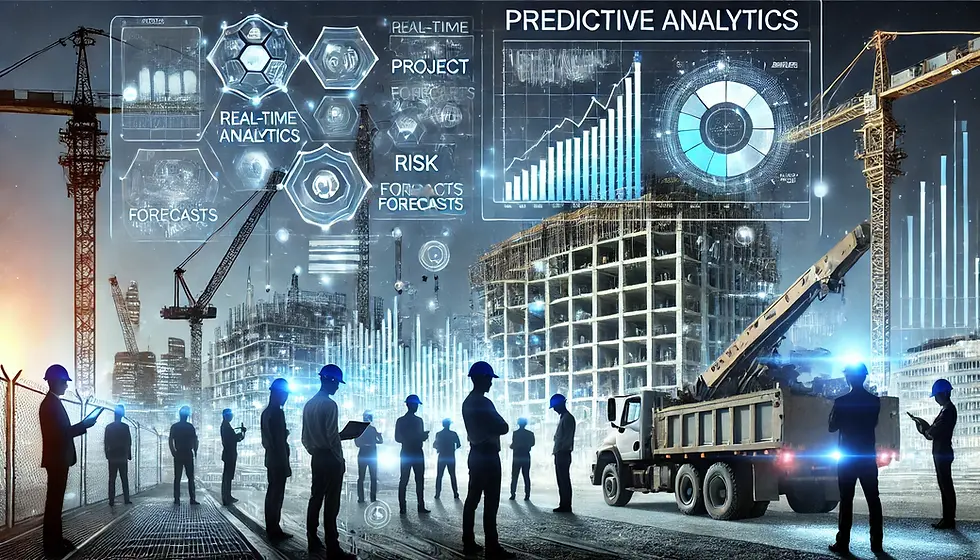
AI also brings substantial value to construction project management. By analyzing vast amounts of data, AI algorithms can help project managers foresee potential delays, budget overruns, or resource shortages before they arise. Machine learning algorithms can track project timelines, historical data, and even weather forecasts to detect patterns that may impact the schedule. This predictive capability allows construction firms to take proactive steps, saving time and resources. Additionally, AI-driven automation in logistics management can optimize the delivery of materials and allocation of workforce, leading to smoother, more efficient project execution.
The integration of AI and robotics is another exciting development in the AEC industry. Autonomous machinery, like drones and robotic systems, can perform tasks such as surveying, site inspections, and even construction with remarkable accuracy and speed. Drones equipped with AI-powered image recognition software can perform site inspections, monitor progress, and even detect potential hazards, providing real-time data to project managers. Similarly, robotic bricklayers and other automated systems are taking on repetitive or high-risk tasks, increasing worker safety and efficiency while reducing labor costs.
Building Information Modeling (BIM) is another area where AI is making an impact. BIM creates detailed digital representations of buildings, and AI algorithms can analyze these models to identify structural issues, optimize energy use, and improve space utilization. AI-driven BIM platforms can also simulate different project scenarios, allowing teams to understand the potential impact of design changes on project outcomes. This predictive capacity enhances decision-making, reduces errors, and ensures more sustainable and resilient building designs.
Furthermore, AI in the AEC sector has a significant impact on sustainability efforts. Machine learning algorithms can optimize resource usage and reduce waste by recommending sustainable materials and efficient construction techniques. AI-driven simulations of energy consumption in building designs help engineers develop greener buildings that comply with increasingly stringent regulations and reduce the industry’s carbon footprint.
However, adopting AI in the AEC industry is not without challenges. Integrating AI systems requires an upfront investment in technology and skills training, and many firms face a shortage of AI-savvy talent. Additionally, the high variability of construction projects compared to manufacturing or logistics can make it difficult to standardize AI solutions across the industry. Nevertheless, as AI technologies continue to advance and become more accessible, more firms are likely to embrace these tools.
In summary, AI is revolutionizing the AEC industry by enhancing design capabilities, streamlining project management, and improving safety and sustainability. As AI becomes further integrated into AEC processes, firms that adopt and adapt to these technologies will gain a competitive edge, creating innovative solutions and setting new industry standards. The future of the AEC industry will be increasingly data-driven and automated, with AI at the heart of its evolution.